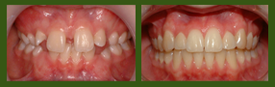

Clear aligners have become a go-to choice for teens and adults who want a straighter smile without brackets and wires. But one common belief is that aligners are not effective for more serious orthodontic problems, such as an overbite.
But the truth is that, in many cases, clear aligners can actually correct an overbite. Whether they’re the right choice for you depends on what’s causing your overbite and how significant it is. Let’s take a closer look.
What is an Overbite?
Some overlap between your upper and lower front teeth is completely normal. When you bite down, your upper teeth should sit slightly in front of and over your lower teeth. An overbite becomes a problem when that overlap is excessive, meaning your upper front teeth cover too much of your lower teeth.
- A more pronounced overbite can affect more than the look of your smile. Over time, it can lead to:
- Uneven wear on the front teeth
- Irritation of the gums behind the upper teeth or in front of the lower teeth
- Jaw discomfort or strain
- A higher risk of chipping the upper front teeth
These issues can affect both your oral health and your confidence, which is why correcting an overbite is about much more than appearance.
Can Clear Aligners Correct Your Overbite?
At our office, we offer SureSmile aligners, which use a series of custom-made, clear trays to gradually shift your teeth into their planned positions. Because they are removable, you can take them out to eat, brush, and floss, and they are nearly invisible when you wear them.
SureSmile aligners can treat a range of orthodontic concerns, including overbites. Advancements in the technology have significantly increased the number and severity of orthodontic concerns that aligners can successfully treat. But every case is unique, and there are a few factors to consider.
The Root Cause
Some overbites are dental, meaning the problem comes from the position or angle of the teeth. For example, the upper front teeth may tip forward. Others are skeletal, meaning the upper and lower jaws are mismatched in size or position. Dental overbites usually respond very well to clear aligners. Skeletal overbites can be more complex, since moving the teeth alone may not fully correct how the jaws fit together.
Severity of Your Overbite
Clear aligners tend to work best for mild to moderate overbites. For more significant cases, traditional metal braces or ceramic braces may give your orthodontist more control over tooth movement and help you achieve a better result.
Your Age
For growing children, an overbite related to jaw development may be best addressed with early, or Phase-One, treatment. Guiding the jaw while there is still growth to work with can make later treatment simpler and help create a more stable bite. Teens and adults, on the other hand, are often excellent candidates for clear aligners.
How Consistently You Wear Your Aligners
Clear aligners only work when they are in your mouth. To keep your bite correction on track, you’ll need to wear your aligners 20 to 22 hours a day, taking them out only to eat or clean your teeth. If you can commit to wearing aligners as directed, you may be a better candidate than someone who knows they will have trouble following through and could be better off with a fixed apparatus.
Ready to Correct Your Overbite?
An overbite doesn’t have to mean years with braces. For many patients, clear aligners offer a comfortable, discreet way to gain the straighter smile you’ve always wanted, as well as a healthier bite. And, if aligners aren’t the best option for you, we’ll help you find the treatment that is.
Schedule your orthodontic consultation with our team today to find out if clear aligners are right for you.