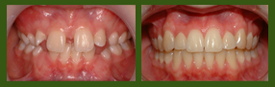

If you’re considering braces or clear aligners, you’re probably focused on getting a straighter smile. But a question we hear often is whether that treatment will also change the shape of your face.
The answer is a little more nuanced than a simple yes or no. Here’s what actually happens to your facial appearance during orthodontic treatment, and what stays the same.
How Teeth and Jaw Position Affect Your Face
Your teeth do more than help you chew and speak. They also act as a support structure for the soft tissue around your mouth, including your lips and cheeks. When teeth are moved into a healthier position, that support structure changes too, which can subtly affect how your face looks.
The Ways Orthodontic Treatment Can Change Your Face Shape
Facial changes from orthodontic treatment tend to fall into a few categories, depending on what’s being corrected. Keep in mind that some of these are very subtle, but they are real. Here’s a closer look at each one.
Defining Your Jaw and Profile
If you have a deep overbite, an underbite, or a jaw that sits too far forward or back, it can affect more than your teeth. Your chin, lips, and nose all work together to create your profile, and jaw position plays a big role in how that profile looks.
- Deep overbite: This can cause the lower jaw to sit further back than it should, making the chin look recessed or the lower face look shorter.
- Underbite: A prominent lower jaw can make the chin look larger or cause the lower face to jut forward.
As we correct these bite issues and guide the teeth into better position, many patients notice a more defined chin and a profile that looks more proportional overall. While orthodontics don’t significantly affect the shape and size of the jaw, they can impact how teeth sit and fit together, ultimately impacting jaw position and appearance – and almost always for the better.
Volume in Cheeks and Lips
Crowded teeth or a narrow upper arch don’t leave much room for the lips and cheeks to rest against. Over time, this can make the area around the mouth look flatter, or even slightly sunken, especially in more severe cases.
As treatment widens the arch and creates space for the teeth to sit properly, the lips and cheeks gain more structure behind them. The result can be lips that look slightly fuller, or, in the case of a protruding lip, a more balanced smile. Orthodontic correction can also add subtle volume where cheeks once appeared sunken, or even give the illusion of more pronounced cheekbones where a bite issue was affecting the lower face.
Improved Facial Symmetry
A crossbite occurs when the upper and lower teeth don’t line up correctly, and it can sometimes cause the lower jaw to shift to one side to accommodate the bite. Over time, this can create subtle asymmetry, with one side of the face looking different from the other.
Correcting a crossbite allows the jaw to settle into a more natural position without needing to compensate for the misaligned bite. This often results in a more even, symmetrical appearance.
Relaxed Jaw Line
Some patients clench or grind their teeth to compensate for a misaligned bite, which can lead to a more square or tense-looking jawline over time from overworked jaw muscles. Once the bite is corrected and the muscles no longer have to work as hard to find a comfortable position, many patients notice their jawline looks a bit softer and more relaxed.
What Orthodontic Treatment Won’t Do
While these changes are real, it’s important to have realistic expectations. If you’re hoping for the kind of dramatic transformation you might see with cosmetic procedures, braces or clear aligners aren’t designed for that.
Orthodontic treatment focuses on moving your teeth and, in some cases, can have a slight effect on the jaw position, palate, or surrounding soft tissue. It does not reshape your underlying bone structure the way cosmetic surgery or dermal fillers do. So don’t expect new cheekbones, a drastically altered jawline, or significantly plumped lips. The goal is a healthier, better-aligned bite, with potential facial changes as a natural side effect of that improved alignment.
That said, don’t underestimate the power of your smile to transform your look. Correcting protruding teeth, filling noticeable gaps, and straightening overcrowding can have a dramatic effect on your overall appearance.
Treatment Timing
For growing children and teens, orthodontic treatment can sometimes have a more noticeable effect on facial development, since the jaw is still forming. Early intervention can help guide jaw growth into a better position, which is one reason we recommend early evaluations. For adults, the jaw is done growing, so changes tend to be more subtle and related to tooth position only.
See What’s Possible for Your Smile
If you’re curious how orthodontic treatment might affect your appearance, the best way to find out is with a personalized evaluation. Schedule a consultation with our team, and we’ll walk you through what realistic changes you can expect based on your bite, jaw position, and treatment goals.