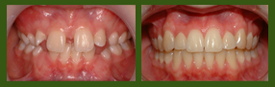
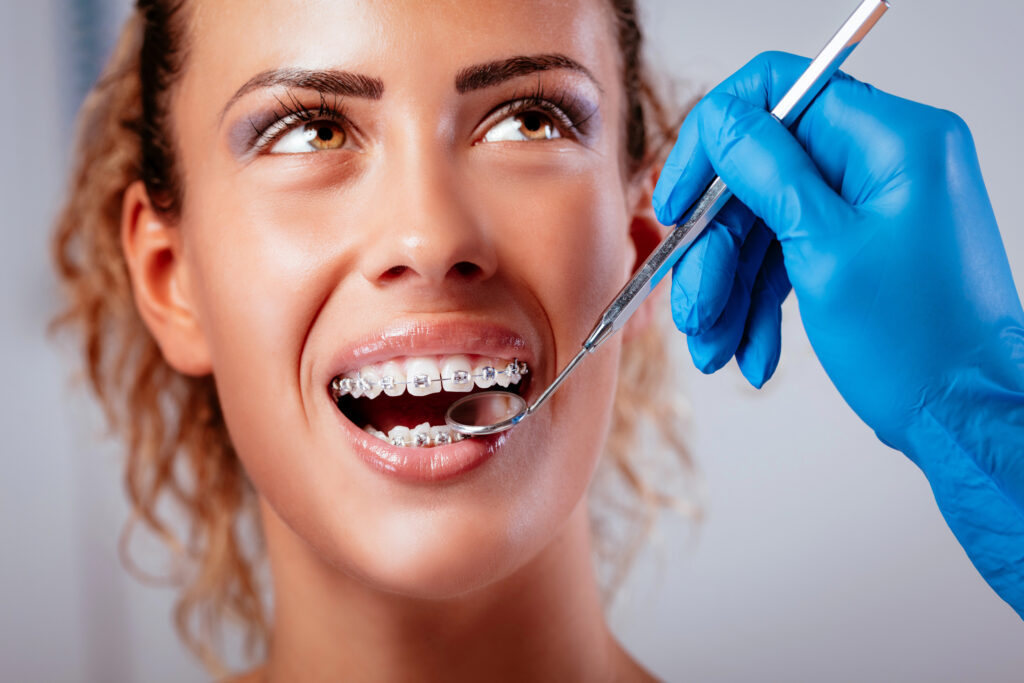
For many patients, the words “tooth extraction” can be nerve-wracking, especially in the context of orthodontic treatment. If you’ve heard stories from family or friends about having teeth pulled to make way for braces, it’s natural to wonder if the same thing is in store for you.
The good news is that extraction is no longer the default answer it once was. Whether you’ll need to have one or more teeth extracted depends entirely on your individual case, and it’s something your orthodontist can only determine after a full evaluation.
Why Extraction Used to Be Routine
Tooth extraction is becoming less frequent in the field of orthodontics, but that wasn’t always the case. In the past, teeth were often extracted when crowding left too little room in the jaw for everything to shift into place. With fewer diagnostic tools and treatment options available at the time, orthodontists had a narrower range of strategies to work with, so pulling a tooth (or several) was simply the most reliable way to create that space.
Decades of advancements in technique, technology, and our understanding of jaw growth have since given orthodontists far more tools for solving crowding without resorting to extraction first. What once required removing teeth can often be resolved today through careful planning and the right combination of appliances.
Why It’s Far Less Common Today
Modern orthodontists rarely extract permanent teeth, even in cases involving missing teeth, poor jaw alignment, or temporomandibular joint problems. Instead, we look first at whether the space needed can be created in some other way.
A few of the approaches we rely on to avoid extraction whenever possible:
- Early, or Phase-One, treatment. For children around age eight with crowded front teeth, starting treatment early can guide jaw development while there’s still growth to work with, helping prevent the need to extract permanent teeth later.
- Expansion appliances. When a narrow jaw is the source of crowding, gradually widening it over time can create the space teeth need to align properly, all without removing any.
- Thorough diagnostic records. Models, x-rays, and photographs taken at your initial consultation give your orthodontist a complete picture of your bite, jaw size, and tooth positioning before any treatment plan is proposed.
- Modern wire and aligner technology. Today’s materials are able to guide teeth into alignment more efficiently and with more precise control than what was available even a decade ago, often making extraction unnecessary for cases that once required it.
When Extraction Might Still Be Necessary
That said, extraction hasn’t disappeared from orthodontics altogether. In some cases, such as severe crowding, significantly impacted teeth, or certain jaw discrepancies, removing a tooth may genuinely be the best path to a healthy, stable result. Trying to force every tooth into a jaw that simply doesn’t have the room for it can lead to relapse, bite problems, or unnecessary strain on the surrounding teeth down the road.
This is exactly why a thorough exam matters so much before any recommendation is made. We will look at the size of your jaw relative to your teeth, how your bite fits together, and whether your teeth and roots are developing normally. We also consider your facial profile and the long-term stability of your results, not just whether your teeth can be lined up in the short term.
Considering Orthodontic Treatment?
Extraction used to be the assumption. Today, it’s the exception! And this is great news, as most patients never need a single tooth pulled to get a great result.
If you want to find out more about the type of orthodontic treatment that might be best for you, including whether or not that may include extraction, contact us to schedule an appointment.